Can a signal remain traceable from research to paper execution?
The same signal should have clear data provenance, a consistent backtest interpretation and risk controls before it is considered for a paper workflow.
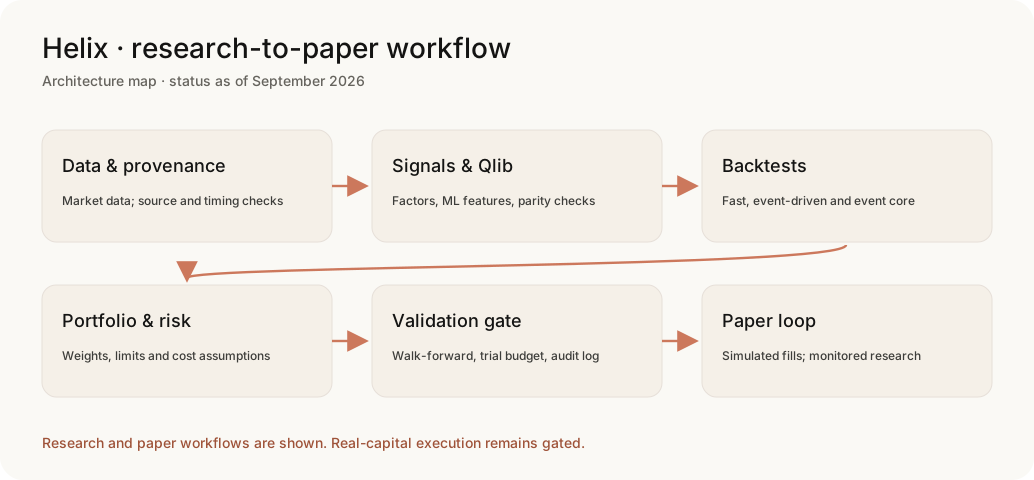
Helix connects signal research, backtesting, portfolio controls, validation and paper trading. The design goal is to make each step inspectable before a result reaches a decision.
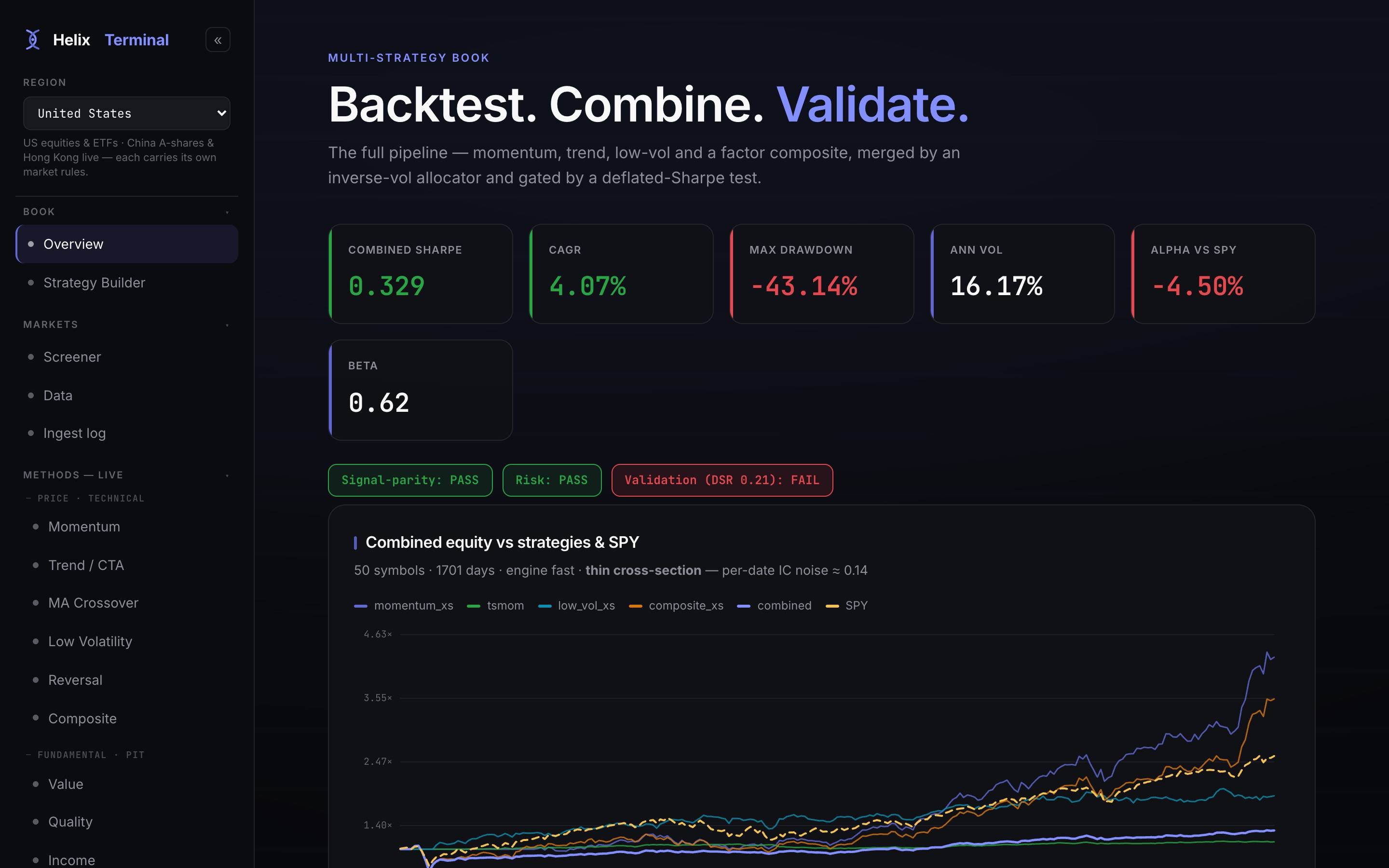
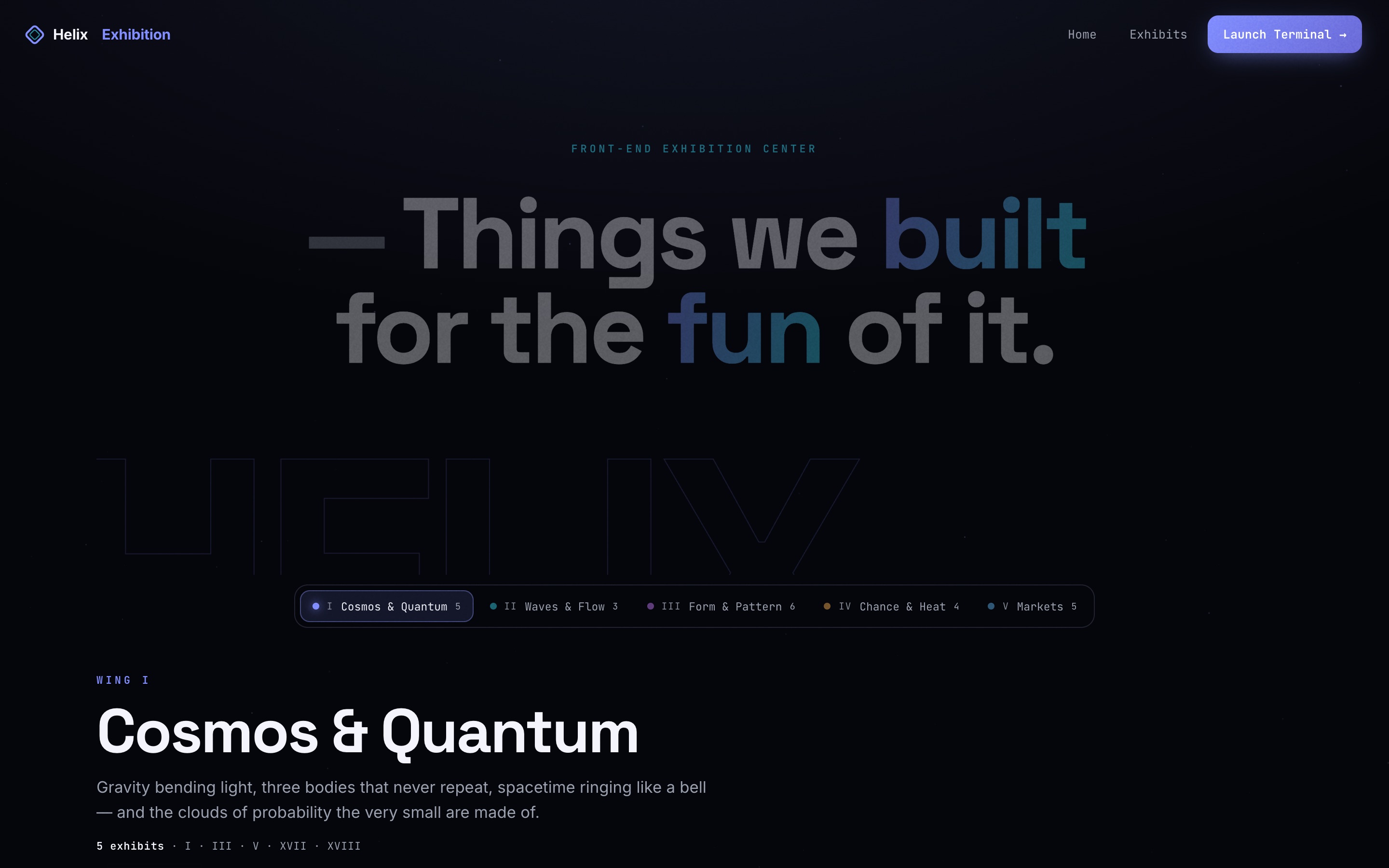
Real screenshots of the Helix web front. The terminal shows a saved snapshot (27 Jul 2026, 50 liquid US stocks): an in-sample backtest whose combined book fails Helix’s own deflated-Sharpe gate. Its numbers are not performance claims.
The same signal should have clear data provenance, a consistent backtest interpretation and risk controls before it is considered for a paper workflow.
I designed and built Helix: a shared signal core, a factor lab, several backtest engines, a portfolio allocator with risk limits, validation gates and a simulated paper-trading loop. It builds on others' work: Qlib for one ML sleeve, and a factor engine and factor library vendored from HKUDS Vibe-Trading under the MIT licence.
The local system documents signal parity checks, embargoed walk-forward research, cost-aware backtests and run records keyed by code, configuration and data. The diagram above is a map of those components, not a performance chart.
Point-in-time universe masking is deliberately not routed through strategy backtests, so absolute returns are overstated by about five points a year while relative comparisons hold. Delisted price coverage is incomplete, and the recorded paper history includes replayed days. Real-capital execution remains gated.